Pan Hailong of Taiyuan E.P. Shares Insights on Environmental Industry Trends
(Centered headline, consistent with the original layout)
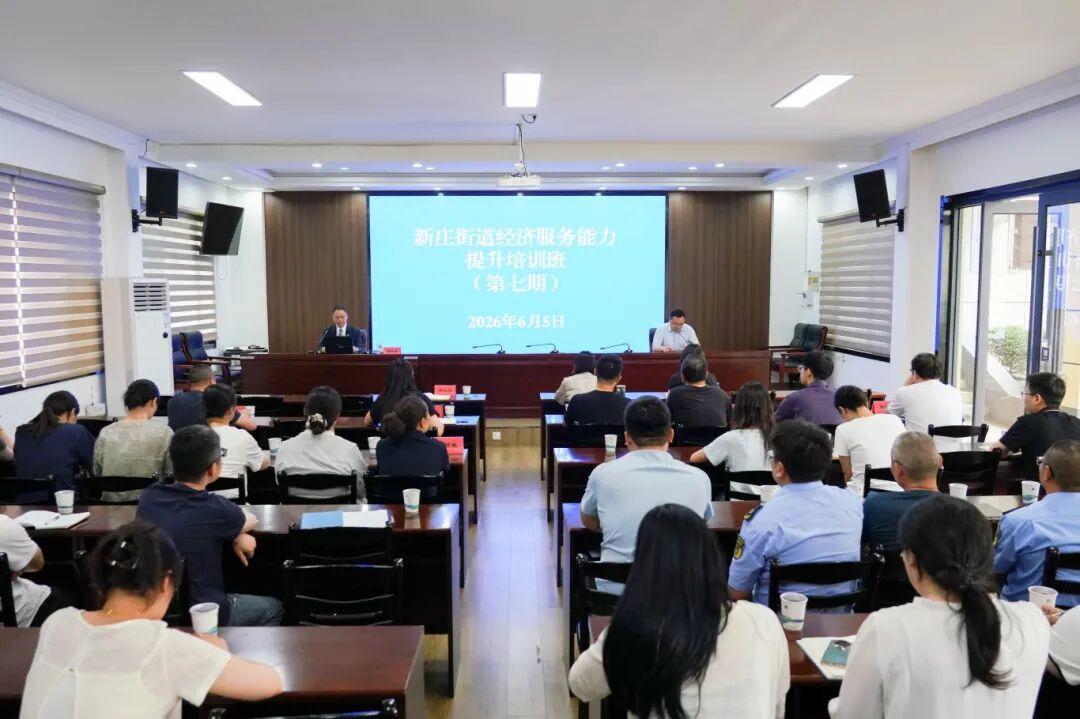
Recently, Pan Hailong, founder and general manager of Jiangsu Taiyuan Environmental Protection Technology Co., Ltd. (hereinafter referred to as “Taiyuan E.P.”), was invited to serve as a guest lecturer at the Economic Service Capacity Enhancement Training Program hosted by Xinzhuang Subdistrict, Yixing City.
Drawing on his 33 years of industry experience and the company’s deep roots in Xinzhuang, Pan systematically explained the development pathway for Yixing’s environmental protection industry to transform from the “Hometown of Environmental Protection” to the “Capital of Environmental Protection”, and put forward a number of constructive suggestions on government-enterprise collaboration, industrial chain upgrading and regional ecosystem construction.
Industry Dilemma and Transformation Direction
Pan first sorted out the development context of Yixing’s environmental protection industry. Yixing currently has about 5,000 environmental protection enterprises, including more than 3,800 manufacturing enterprises, with a domestic market share of more than 60% in non-standard water treatment equipment manufacturing, making it the most concentrated area of the global environmental protection industry. After years of development, a large number of enterprises have been derived in the industry, forming a strong industrial cluster effect.
However, Pan also faced up to the pain points of the industry: most enterprises still stay in the project-based “hunting” or “fishing” models (industry slang referring to one-off project acquisition with no sustained operational revenue), lacking continuous cash flow; serious market homogenization, low-price bidding leads to “bad money driving out good”; coupled with the rising compliance costs brought by stricter policies, the industry is undergoing deep reshuffle.
He pointed out that the environmental protection industry is shifting from the “cost center” of end-of-pipe treatment to the “value center” of resource recycling. “Waste is a resource placed in the wrong place. Realizing the recycling of pollutants through separation technology is the fundamental direction of sustainable development of the industry.”

Triple Innovation: Technology, Model and Digitalization
During the sharing, Pan focused on Taiyuan E.P.’s exploration of promoting industrial upgrading with intelligent manufacturing. The company has invested over 100 million yuan to build the only fully automatic standard module production line in China, realizing the transformation from the traditional “construction” mode to the “intelligent manufacturing” mode. Its self-developed TIMP (Taiyuan Integrated Modular Prefabricated) assembled water treatment plant technology has six core advantages widely recognized in the industry — briefly referred to as “5-6-7-8-9-10”: service life of more than 50 years, more than 60% land saving, more than 75% carbon emission reduction, more than 80% construction period shortening, more than 90% on-site construction reduction, and standard modules can be disassembled, assembled and recycled without damage. In addition, operating energy consumption can be reduced by more than 20%, with significant long-term benefits.
Facing the pain points of high capital risk and long payment cycle in the domestic engineering market, Taiyuan E.P. is promoting the transformation of business model from “selling equipment” to “full-lifecycle service”. The company launched a leasing model many years ago — a service model based on equipment leasing, which allows equipment to be disassembled and reused without damage between different projects, realizing asset liquidity. Pan explained with a practical case: the 15,000-ton sewage plant built by Taiyuan E.P. in the form of equipment leasing lost more than 5 million yuan in the first round of use due to large upfront investment and short leasing cycle, and then realized a profit of more than 5 million yuan by recycling to other regions. This verifies the huge value of modular and movable assets in revitalizing stock and optimizing allocation.
In terms of digitalization, Taiyuan E.P. has carried out digital twin construction to realize remote monitoring and control, and explored the application of AI in early warning and prediction, such as automatically adjusting the dosage when the influent water quality exceeds the standard, which not only reduces the risk of exceeding the standard but also saves operating costs. Pan emphasized that innovation requires calm thinking about the three fundamental questions of “who am I, where to go, and how to get there”, and continuously improves the enterprise’s strategic thinking and innovation ability.
Strategic Two Wheels: Policy Transformation and Overseas Market
Facing multiple challenges such as macroeconomic pressure, saturated traditional market and intensified industry competition, the overall scale of China’s environmental protection industry has remained stable at more than 2 trillion yuan for four consecutive years. The environmental protection industry has a long-term, clear growth logic in the domestic market, and is currently in the critical period of transformation from “scale growth type” to “quality benefit type”. Coupled with the “dual-carbon” goals, the domestic market space is clear.
The overseas market is another focus of Taiyuan E.P.’s strategic layout, but it is far from smooth sailing.
The attraction of overseas market is real. Goods can be collected 90%+ of the payment upon arrival at the port. Compared with the normal state of zero down payment and delayed progress payment for domestic engineering projects, capital security and payment collection efficiency are significantly better. This is also the core reason why more and more private enterprises prefer to go overseas — even if the profit is slightly lower, they are willing to exchange certainty for cash flow security.
However, Pan said that the real difficulty of going overseas is not capital or willingness, but the gap between standards and details.
Chinese environmental protection enterprises have long been based on domestic projects, and lack systematic understanding of the product standard systems actually implemented in various countries. There are great differences in water quality parameters, environmental protection regulations, and equipment certification requirements of various countries, and different countries often implement standards and norms of the United States, Europe or local self-contained systems, rather than the national standards familiar in China. A piece of equipment that operates maturely in China may fail to pass the acceptance due to incompatible standard interfaces and inconsistent detection indicators when it arrives at the overseas site.
A more hidden difficulty lies in the lack of on-site cognition. After doing domestic projects for a long time, enterprises have default expectations for working condition, construction environment and supporting infrastructure, but the geological conditions, climate environment, power specifications and logistics cycle of overseas projects are often completely different from domestic experience. Lack of understanding of on-site conditions means that the fault tolerance of the preliminary design scheme is extremely low, and once an error occurs, the cost of cross-border rectification is extremely high.
What tests the internal strength most is the details of data and documents. Overseas projects have far higher requirements for the completeness and accuracy of technical documents, installation manuals, operation and maintenance documents, material traceability, and compliance certification than domestic ones. The “flexible on-site adjustment” and “oral confirmation” common in domestic projects do not work overseas. Missing a document or inconsistent data may lead to the whole batch of equipment being stranded in the port or project delay. These details cannot be solved by “hiring a translator”, but require enterprises to establish a set of capabilities from scratch in product definition, document system and compliance process.
For follower enterprises lacking these pre-accumulations, going overseas is not an opportunity but a deep pit.

Government-Enterprise Symbiosis: Building Differentiated Competitive Advantage
As an enterprise rooted in Xinzhuang, Pan put forward a number of targeted suggestions in the sharing, hoping to build differentiated competitive advantages and open application scenarios.
· In terms of industrial chain collaboration: It is suggested that leading enterprises drive upstream and downstream to form an ecosystem, introduce supporting enterprises such as high-end instrumentation and new materials, and avoid homogeneous competition.
· In terms of policy support system: It is suggested to establish a “three haves and five ones” mechanism, namely “three haves” of independent intellectual property rights, industrial chain collaboration, and new material/new process cooperation, and “five ones” of identifying enterprises’ demands in financing, talent, market, land use and application scenarios.
· In terms of talent retention: It is pointed out that it is difficult to retain talents after introduction, and the government needs to provide targeted supporting support in housing, children’s education and other aspects.
· In terms of higher education resources: It is suggested to actively strive for branches or research institutes of Nanjing University, Nanjing University of Aeronautics and Astronautics and other universities in Yixing, and fully utilize the geographic advantage of professors from Jiangnan University being reachable within 5 minutes.
· In terms of pilot test scenarios: It is suggested that the government coordinate to provide new technology verification sites, so that enterprises can iterate products locally.
Environmental Protection is a Long-Term “Soil”, Not a Short-Term Wind Gap
In the summary, Pan emphasized that the environmental protection industry is not a wind gap chasing short-term dividends, but a long-term “soil” that can cultivate thousands of industries.
He put forward the development concept of “government-enterprise symbiosis”: if Xinzhuang is good, Taiyuan is good; if Taiyuan is good, wherever Taiyuan’s business expands, good local experience and industrial capabilities will radiate there.
Enterprise development should “grasp the trend of the times, act with the trend, advance by taking advantage of the trend, and rise by creating the trend”, and realize common development in the coordination with the local government.

Latest News
-
2026-08-25
-
2026-08-13
-
2026-08-10
-
2026-08-05
-
2026-07-20
-
2026-07-17
-
2026-07-15
-
2026-07-06
-
2026-07-03
-
2026-06-10