The More Advanced the Chips, the Greater the Water Consumption
Modular Wastewater Treatment Plants Recycle 96% of Their Water Footprint
While large AI models and high-end memory chips drive the rapid growth of the digital economy, few people pay attention to the environmental costs behind this industry. The manufacturing of memory chips requires vast amounts of ultrapure water to clean nanoscale circuits; the more advanced the process, the higher the water intensity, resulting in wastewater with complex compositions—including nano-silica, heavy metal ions, fluorides, and organic solvents—which is extremely difficult to treat. Power generation and semiconductor manufacturing account for 96% of the water footprint in the AI value chain, representing the industry’s primary water-intensive operations.
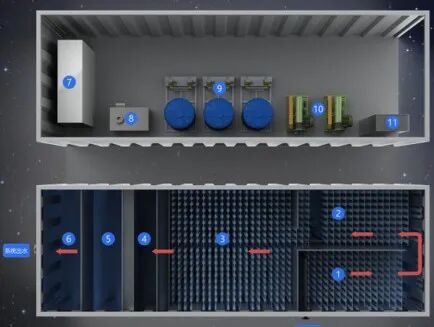
Jiangsu Taiyuan Environmental Protection Technology Co., Ltd. (hereinafter referred to as Taiyuan Environmental Protection) has developed the TIMP Intelligent Modular Prefabricated Wastewater Treatment System to specifically address four core challenges in the memory industry: significant water quality fluctuations, stringent discharge standards, limited space, and tight project timelines.
1.Graded Treatment and Specialized Membrane Technology

The wastewater generated by different processes in memory production lines (CMP polishing, etching, and lithography) exhibits significant variations in characteristics, placing extremely high demands on pretreatment capabilities.
The TIMP modular water treatment system leverages Taiyuan Environmental Protection’s extensive experience in wastewater pretreatment. It combines a core process featuring multi-stage A/O + biological concentration and augmentation technology coupled with membrane separation technology, utilizing a flexible modular configuration to enhance pretreatment capabilities according to water quality requirements.
Additionally, the system incorporates specialized nanofiltration/reverse osmosis membrane modules to achieve deep removal of characteristic pollutants such as fluoride ions, copper, and nickel. The treated effluent meets production line reclaimed water standards and can be reused in processes such as cleaning, forming a closed-loop water resource cycle of “production line – treatment – reuse.”

2. Modular Architecture Adapted to Industrial Pace
Memory chip factories face tight construction schedules and limited site space.
The TIMP modular water treatment system replaces traditional concrete wastewater treatment plants with a “factory-prefabricated + on-site assembly” model, reducing construction time by 80% and footprint by 60%. Standard modules can be assembled via bolted connections, allowing for non-destructive disassembly, reuse, and a service life exceeding 50 years. This design adapts to the expansion pace and spatial constraints of memory production lines while accommodating line transitions or relocations.

3. AI-Driven and Resilient DesignThe system utilizes a comprehensive sensor network and intelligent control system to collect real-time data on key process parameters and energy consumption.
Algorithms automatically regulate aeration volume, pump frequency, and sludge return ratio, ensuring the system operates under optimal conditions at all times and minimizing energy and chemical consumption. A deeper integration involves linking data with the memory factory’s MES/ERP systems—predicting wastewater discharge peaks based on production schedules and adjusting operating parameters in advance, thereby transitioning from end-of-pipe treatment to proactive prediction.

4. Low Carbon and Resource Recovery
Compared to traditional wastewater treatment plants, the TIMP modular water treatment plant achieves a 75.4% reduction in CO₂ emissions and reduces operational energy consumption by over 20%. Furthermore, the system can produce high-purity reclaimed water to replace raw water in production lines, transforming environmental investments into resource benefits.
Key units adopt an N+1 configuration to meet the reliability requirements of 24/7 continuous operation on production lines; pre-installed emergency treatment module interfaces ensure rapid response during production expansion windows.
Taiyuan Environmental Protection’s TIMP modular water treatment system has been included in the Ministry of Water Resources’ Catalog of Advanced and Mature Water-Saving Technologies and Equipment, as well as the National Catalog of Major Environmental Protection Technologies and Equipment Encouraged for Development. The technology has been repeatedly certified as being at the “international leading level.” Moving from “compliant discharge” to “resource recycling,” water treatment systems are becoming an integral part of the smart manufacturing ecosystem within the semiconductor industry—not as a lagging back-end facility, but as infrastructure that supports the release of green production capacity.
Latest News
-
2026-08-25
-
2026-08-13
-
2026-08-10
-
2026-08-05
-
2026-07-20
-
2026-07-17
-
2026-07-15
-
2026-07-06
-
2026-07-03
-
2026-06-10